 Anna
Anna
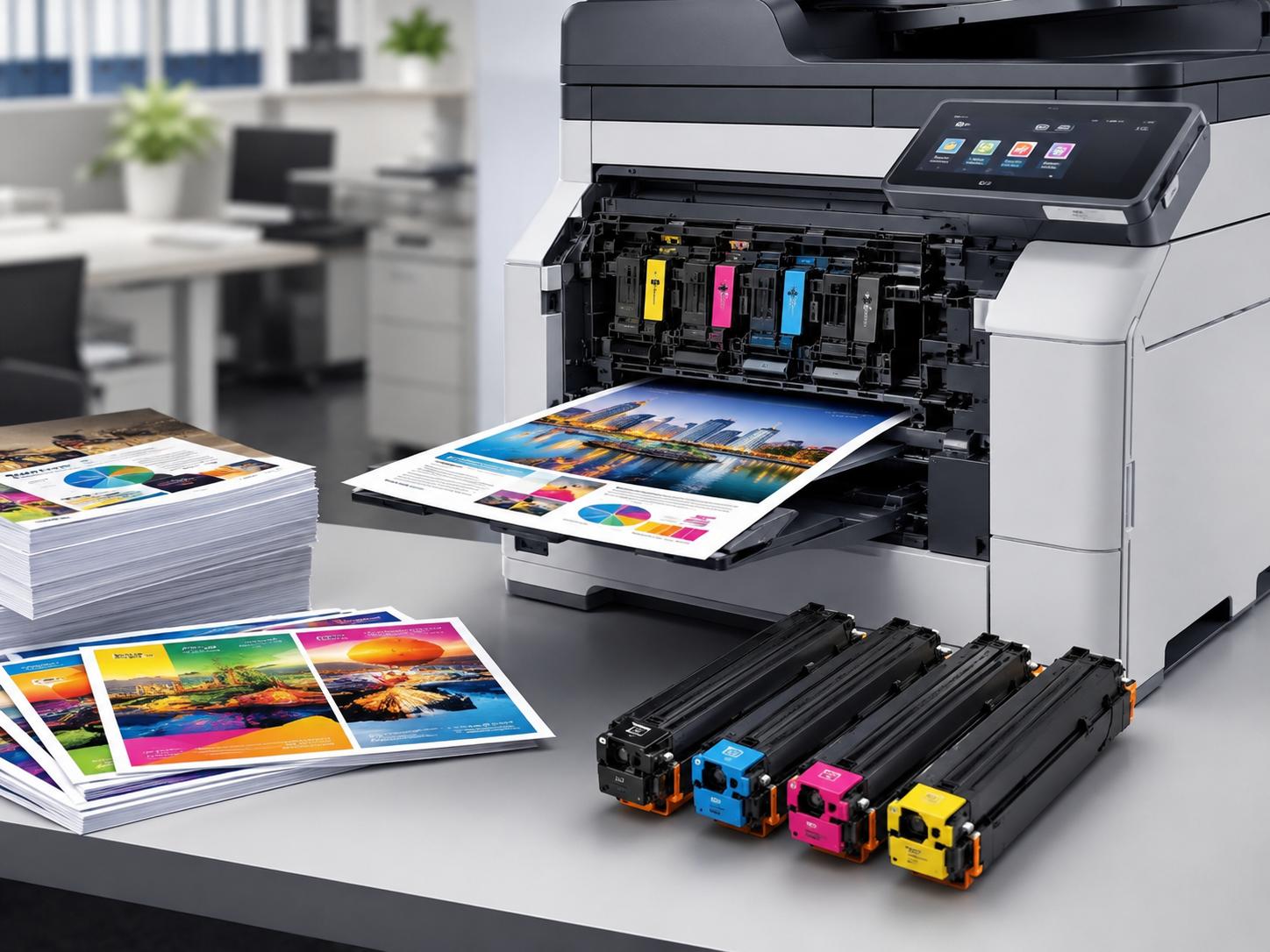
Modern business environments rely heavily on seamless printing operations to maintain productivity and professional communication. However, the search for a reliable color toner cartridge often feels like solving a complex puzzle where one wrong piece leads to hardware errors, poor image quality, or excessive downtime.
The stakes for a business are high. Inconsistent printing supplies do not just affect the appearance of a document; they lead to hidden costs through increased maintenance, wasted paper, and the frustration of “toner not recognized” errors. Understanding the technical nuances of how a color toner cartridge interacts with advanced laser systems is the first step toward optimizing a printing fleet.
Modern enterprises rarely stick to a single brand. A typical office may manage a diverse array of equipment, ranging from HP and Samsung desktop printers to high-speed Ricoh and Konica Minolta copiers. This diversity forces procurement departments to deal with multiple suppliers, leading to extended delivery cycles and fragmented after-sales support. A case involving one of the largest wholesalers in Egypt demonstrated that managing fragmented specifications from multiple suppliers significantly increased management costs and logistical complexity.
Selecting subpar consumables often leads to immediate technical failures. Low-quality powder frequently results in “flying powder” or toner scattering, which contaminates the internal components of the machine. Common industry issues include background graying and poor fixing durability, where the toner fails to adhere properly to the paper. For high-end advertising or design firms, these inconsistencies damage brand reputation and lead to a surge in quality complaints.
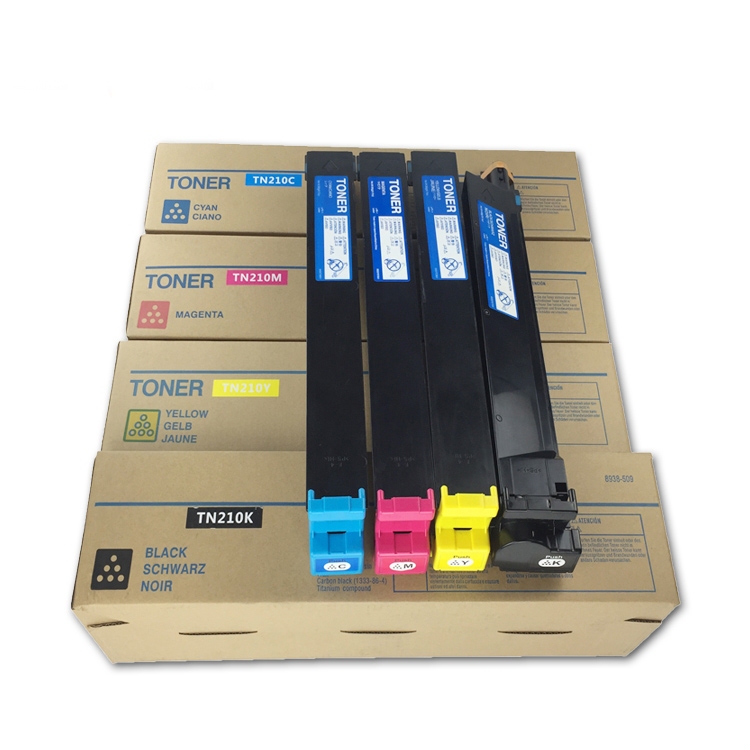
Achieving universal compatibility without sacrificing quality requires a fusion of advanced chemical engineering and precision manufacturing.
Superior compatibility begins with the manufacturing process. ASC operates as a Sino-German joint venture, leveraging 23 years of professional experience to implement rigorous German management models. By utilizing fully automated production lines, human intervention is minimized, ensuring that every batch of color printer toner maintains identical chemical and physical properties. This stability is critical for preventing the development abnormalities often seen in generic alternatives.
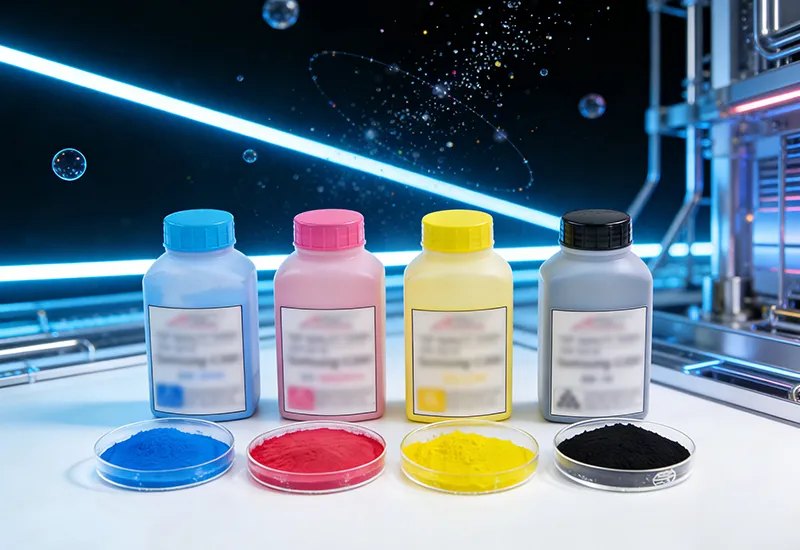
The technical core of a high-performance color toner cartridge lies in its particle distribution. Precision equipment, including ultrafine grinding and high-precision air classifier units, ensures a particle size D50 of 5–10μm. By adjusting the particle size distribution and normalizing the charge distribution, issues like color bleeding—particularly in demanding colors like red—are effectively resolved. This level of control ensures that the toner interacts correctly with the magnetic rollers and blades of diverse printer models, from Canon G72 systems to Xerox DocuCentre series.
Reducing costs should never mean compromising the integrity of the print. The right strategy involves matching the specific needs of the business environment with the appropriate product grade.
For standard office environments, high-capacity universal solutions are recommended. These help businesses achieve a balance between cost control and stable output. Conversely, for print shops requiring professional-grade output, specialized toners are necessary. These products significantly enhance color reproduction and gloss while reducing wear on imaging components like the fuser unit.
Partnering directly with a manufacturer with a 3,000-ton annual capacity ensures a continuous and reliable supply. For international wholesalers, logistical advantages are paramount. Proximity to major ports like Tianjin and Huanghua allows for efficient sea and land transportation. Evidence from global partnerships shows that unified standards and consolidated delivery can shorten delivery cycles to as little as 20 working days, even for large-scale operations.
A professional color toner manufacturer provides more than just off-the-shelf products; they offer customization that supports brand differentiation. This includes the ability to develop customized formulas with high brightness and saturation or unique packaging and chip solutions. Such tailored services empower wholesalers to enter high-end advertising markets where standard compatible products often fail.
Solving the compatibility puzzle requires more than just a cartridge that fits the machine. It demands a solution built on precise particle engineering, automated manufacturing, and a deep understanding of multi-brand hardware environments. By prioritizing stability and high transfer rates, businesses can significantly reduce their total cost of ownership while enhancing print quality. ASC remains a dedicated partner in this journey, providing the technical expertise and scale needed to transform commercial printing from a cost center into a competitive advantage.
Contact us today to explore how our specialized solutions can optimize your printing fleet.
A: A professional color toner manufacturer like ASC utilizes advanced R&D laboratories equipped with particle size analyzers and charge meters to match the chemical properties of original supplies. By adhering to German manufacturing processes and using 6 fully automated production lines, the consistency of the powder is maintained across nearly 20 mainstream brands, including HP, Canon, and Ricoh.
A: Using inferior cartridges often leads to toner scattering (flying powder), background graying, and poor fixing firmness. These issues can damage expensive imaging components and fuser units. Premium options ensure a transfer rate of over 80%, which protects the machine and reduces waste toner accumulation.
A: For a reliable color toner manufacturer, the standard production lead time is approximately 10 days after payment. Sample orders can often be shipped within 3–7 days via air, while large-scale container orders typically take 15–30 days depending on the specific volume and customization requirements.
A: Professional producers frequently offer pre-sales services that include free sample testing with a maximum weight of 10 kilograms. This makes it possible for enterprises to confirm that colors and images will be accurate, with stable fixing qualities.