 author
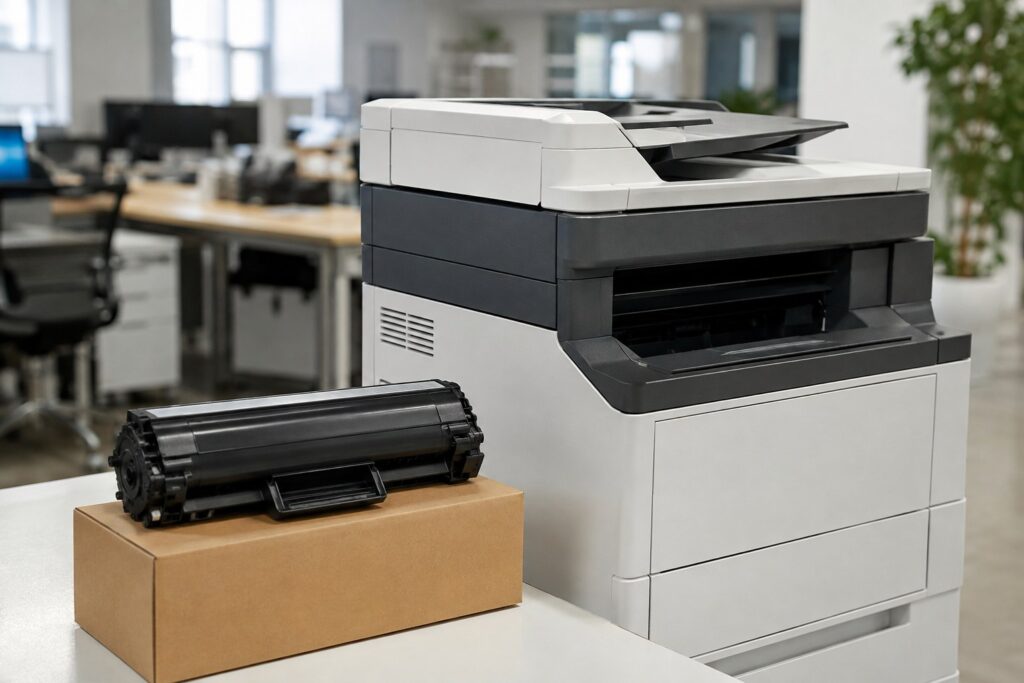
Copier toner powder controls print quality through particle distribution, charge behavior, flowability, and fixing response. When those traits stay balanced, the copier lays down dense text, clean backgrounds, and stable color. When they drift, the output turns gray, weak, or inconsistent, even if the cartridge still fits the machine.
The toner powder for copiers must be engineered in such a way that it will follow an electrostatic charge on the drum and transfer to the paper, where it will then fuse under heat and pressure. All of these processes require specific characteristics of the particles themselves, which must be evenly distributed.
The point of stable toner is not just darker output. In essence, it’s an image pathway that has more control; that way, the powder goes to the right places, is released at the right time, and melts into a strong layer of print material.
A powder that works well in one copier can still underperform in another if the workload, fusing temperature, humidity, or paper type changes. That is why compatibility is not just a model match. It is a balance between toner chemistry, machine behavior, and the way the customer actually prints.
In practice, medium- and high-speed copiers need powder that moves smoothly, transfers cleanly, and keeps image density from slipping during longer runs. A stable fit reduces waste toner, shortens troubleshooting, and makes the printer feel more consistent from day to day.
The production flow for ASC TONER includes batching, mixing, crushing, grading, adding, and packaging. That sequence matters because toner quality begins long before the final cartridge is assembled. If the early blend is unstable, later steps only preserve the problem more efficiently.
Controlled mixing helps the resin, pigment, and additives distribute evenly so the powder behaves the same from sample to sample. In a technical sense, the goal is repeatability. In a business sense, the goal is fewer print surprises and fewer batch-to-batch arguments.
Crushing and grading define the particle shape and the final particle spread, while additives tune flow and charging. That is where print quality starts to split into visible outcomes: strong image density, tidy edges, less background gray, and better transfer efficiency.
ASC TONER’s materials point to the same discipline in test terms, using particle-size analysis, charge measurement, color measurement, printer and copier testing, and temperature trials. Those checks are useful because toner is judged by how it performs, not by how neat it sounds in a spec sheet.
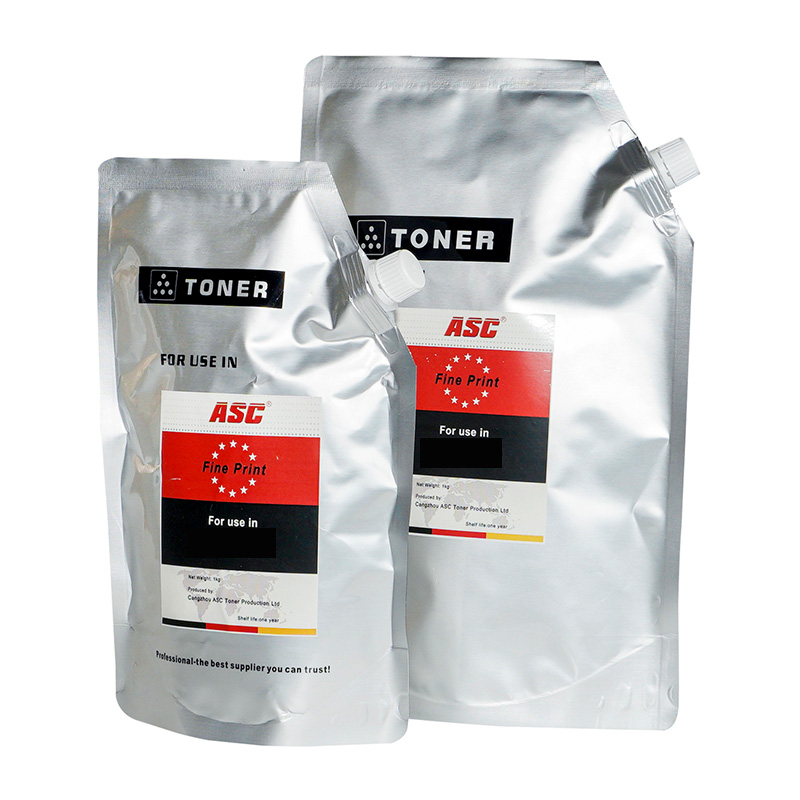
Particle size distribution affects how evenly toner covers the image area. If the spread is too wide, some particles behave differently from others, and the result can be mottled density or a faint haze on the page. A tighter distribution makes the output easier to keep visually consistent.
This is also where background cleanliness lives. Background gray often comes from poor control over charge or fine particles that behave too aggressively. Good toner keeps the non-image area quiet, so text stands out sharply instead of sitting inside a faint veil of dust.
ASC TONER develops color toner solutions; the same particle logic also helps protect color balance and brightness.
Transfer efficiency is the quiet workhorse of print quality. When toner transfers well, the page uses less waste toner, the image looks fuller, and the system stays cleaner over time. When transfer drops, users may see weak solids, visible scattering, or a gradual buildup of maintenance issues.
Flowability has to be controlled rather than simply maximized. Powder that moves too freely can scatter, while powder that moves too slowly can starve the image process. The better formulations keep both behavior and cleanliness inside a narrow working band.
High-speed copier output puts extra pressure on fixing performance. The toner must melt, bond, and cool quickly enough to survive long runs without smearing or dulling. Production-minded users care about more than a pretty sample page; they care about how the print behaves after repeated use.
For service providers and office teams, stability matters because small changes multiply at scale. A toner that holds its density and fixing strength through a long shift is easier to trust than one that starts strong and fades when the workload gets real.
ASC TONER materials mention high- and low-temperature testing, which is useful because powder behavior changes with climate and storage. A toner that stays usable in a warmer room or a colder warehouse is less likely to surprise the customer after transport or seasonal shifts.
That is where environmental testing earns its keep. It links laboratory control to the daily reality of printers, copier rooms, and storage shelves, so the product is evaluated where it will actually be used.
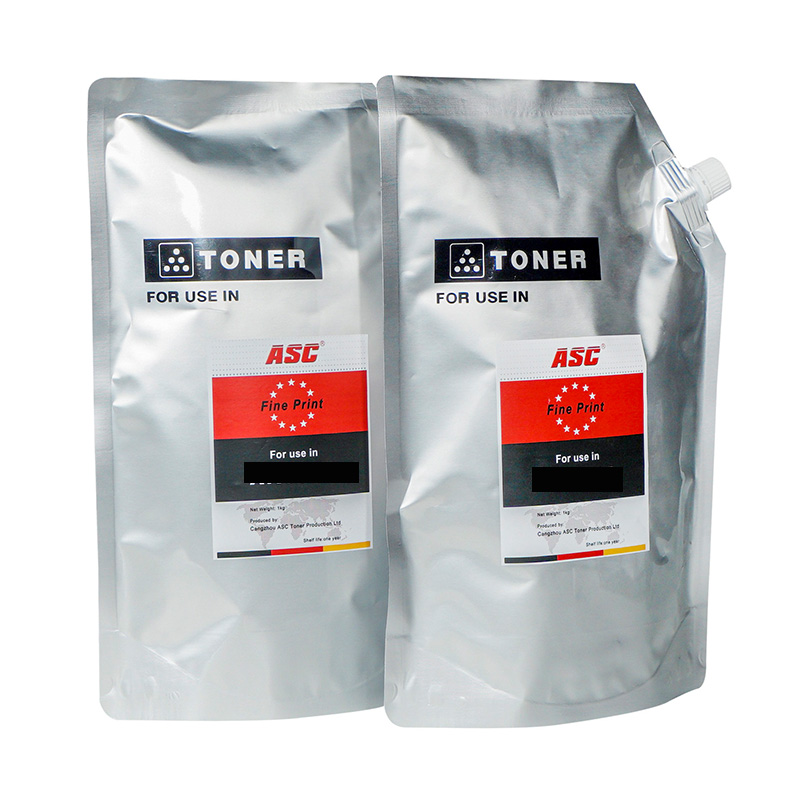
ASC TONER’s test resources are relevant because they connect the powder itself to the final page. Particle-size analyzers, charge meters, colorimeters, copiers, and printers each reveal a different side of the same question: does the toner behave the way the application needs?
A dependable quality process does not chase one lucky sample. It builds a repeatable path from raw-material control to finished output, so the same family of toner can support sample approval, stable replenishment, and cleaner troubleshooting when issues appear.
That is the practical role of quality assurance in a toner program: it turns a powder spec into a print result users can feel.
Some buyers need broad compatibility for routine office documents, while others need application-specific tuning for color accuracy, fixing, or high-volume copier duty. Universal toner is attractive when the goal is simple and stable printing. Application-specific toner makes more sense when failure is expensive, or the visual standard is higher.
Copier toner powder is a small material with an oversized effect on print quality. Its particle control, charge balance, flowability, fixing behavior, and environmental stability decide whether output looks sharp and reliable or uneven and tired.
For buyers who want steadier results, ASC TONER is most valuable when it is approached as a technical printing partner rather than a commodity source. Use the right sample, the right test conditions, and the right production controls, and the powder becomes a dependable part of the print system instead of a hidden variable.
To compare the copier toner powder for a specific machine line, please contact ASC TONER
A: This is responsible for the uniform formation of the image, the cleanliness of the background, and the adhesion of the print to paper. Stable powder results in higher density, smooth solid areas, and low defect rates for extended periods of time. Unstable powder will result in gray haze, poor images, or residual dust.
A: The size of the particle affects charge, flow, transfer, and finally the appearance of the page. If the size distribution is very wide, then there are certain particles that behave in a different manner. This makes the process of printing difficult to manage. Proper management of the size distribution makes the toner predictable.
A: High-speed copiers require powder that transfers well, sets fast, and maintains a consistent density for extended operation. It should also have an anti-scatter property.